Selling
7 Mistakes to Avoid When Buying Pipes, Valves and Fittings
Your satisfaction and happiness is something that is very important to me. I understand how hectic it is to sell a house and it can be difficult if it’s not handled properly.

Buying the wrong valve can mean a leak behind a wall and a repair bill far larger than the part. Specifying pipes, valves and fittings takes research, accurate part numbers and a supplier you can call back. One skipped detail at checkout tends to surface months later.
This article walks through seven buying mistakes, from choosing inferior materials and overpaying at big box stores to ignoring fit, MPNs and SKUs. You will also see how wholesale pricing, account perks and a 75-year supplier like Plumbing Supply and More change the decision.
What Is Plumbing Supply and More?
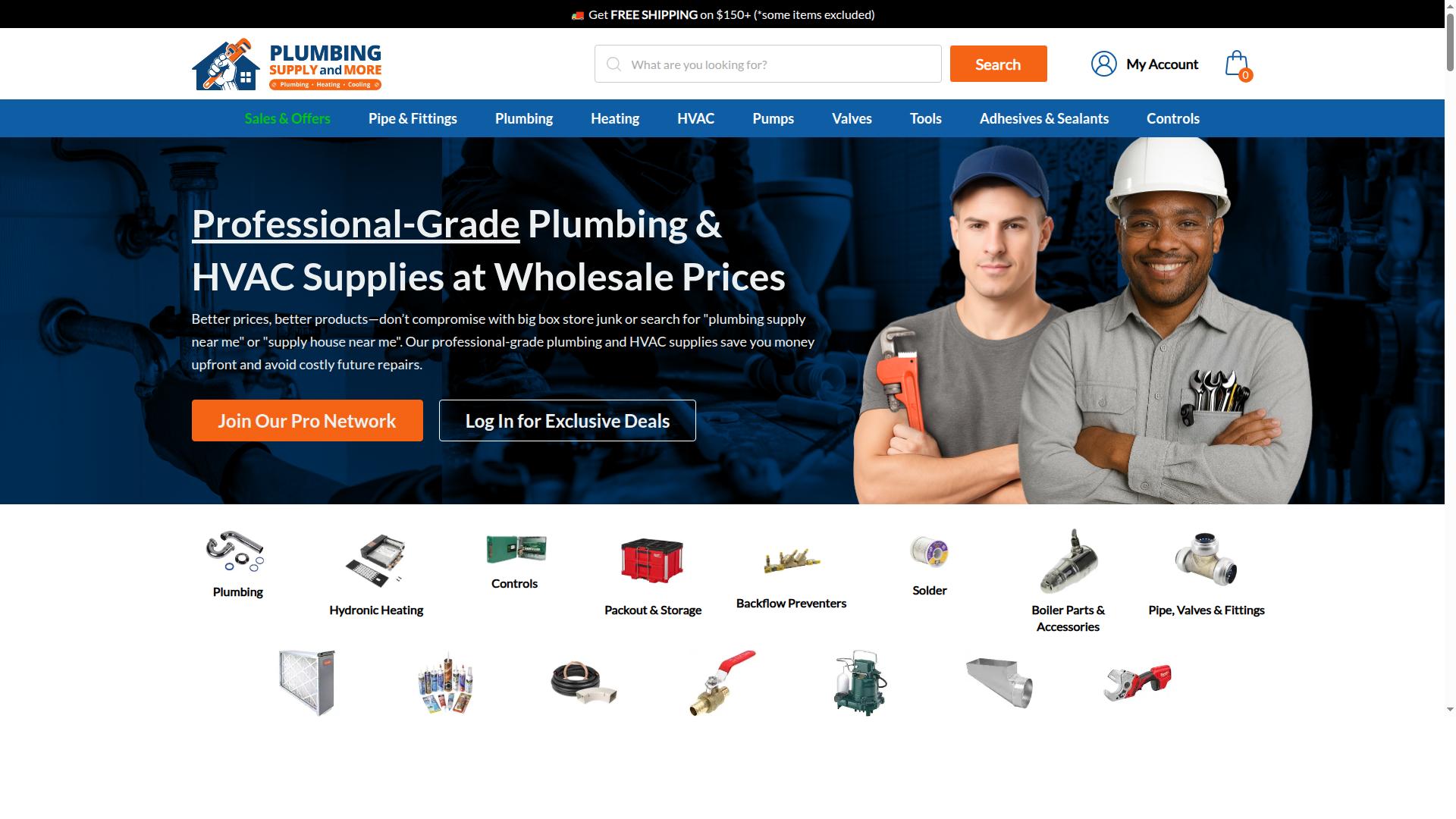
Plumbing Supply and More is a 75-year-old e-commerce supplier of professional-grade plumbing and HVAC products, offering wholesale pricing to contractors and DIYers worldwide. That long track record matters when you are buying pipes, valves and fittings, because the source of your components shapes the quality you install.
The company describes itself as a plumbing and HVAC supply house trusted for 75 years. It sells professional-grade supplies at wholesale prices to plumbers, HVAC technicians, contractors and DIY customers, and it ships globally through its online store.
Its stated focus is straightforward: better prices and products compared to big box stores, with an eye on avoiding costly future repairs. For buyers working through procurement decisions, that positioning is relevant to the mistakes covered in this article.
Choosing the wrong supplier can compound other purchasing mistakes. A valve with the wrong pressure rating or a fitting made from the wrong alloy fails regardless of where it was bought, but a supply house that stocks professional-grade lines gives you a better starting point.
Plumbing Supply and More serves both trade professionals and DIY customers, which means the same catalog covers routine replacement parts and specification-driven industrial supply needs. Whether you are matching a pipe schedule, confirming a thread standard like NPT or BSP, or selecting a valve type for a specific duty, sourcing from a supplier with a professional-grade focus reduces the risk of settling for a lower-grade substitute.
The 75-year history is the clearest signal of legitimacy here. A supply house does not stay in business that long by selling substandard fittings or misrepresenting what it stocks. For buyers weighing where to purchase pipes, valves and fittings, Plumbing Supply and More stands as an established, professional-grade option rather than an unknown storefront.
Do the 7 Buying Mistakes Apply to Shopping at Plumbing Supply and More?
Yes, the same seven procurement pitfalls that plague industrial buyers also surface when purchasing pipes, valves, and fittings online, and Plumbing Supply and More directly addresses each one.
These mistakes are not unique to large industrial supply chains. They show up in everyday purchasing decisions, from a maintenance team ordering replacement gate valves to a contractor sourcing elbows, tees, and reducers for a retrofit job.
What changes is the setting. Instead of a purchase order routed through a distributor, the buyer is often clicking through an online catalog, which makes material specification and sizing verification easier to overlook.
The seven mistakes covered in this article are common across plumbing and HVAC procurement. They include skipping pressure and temperature ratings, confusing pipe schedules, mismatching thread standards such as NPT and BSP, and choosing the wrong valve type for the application.
Each one carries real consequences: premature corrosion, leaks at joints, incompatible connection methods, and costly returns or rework.
In the sections that follow, we evaluate each mistake in the context of shopping at Plumbing Supply and More. The goal is to show how the supplier's practices help buyers sidestep these errors, from clear product listings to organized categories that make comparison straightforward.
Readers will see how a structured online storefront supports better purchasing decisions and reduces the guesswork that leads to mismatched fittings or undersized valves.
Treat this section as a bridge. The seven mistakes are the framework, and Plumbing Supply and More is the lens through which each one is examined, one at a time.
Mistake #1: Choosing Inferior Products That Lead to Costly Repairs
Selecting low-quality pipes, valves, or fittings often leads to premature failures, water damage, and expensive rework. The savings from a cheaper part rarely survive the first leak, and they never survive a shutdown.
Economy-grade components may carry a lower price tag, but they often fall short on pressure rating, temperature rating, and corrosion resistance. That gap shows up later as corrosion, joint failures, and system downtime that costs far more than the part ever saved.
Professional-grade materials such as stainless steel, carbon steel, PVC, CPVC, and copper are built to stricter specifications and hold up better under demanding service conditions. The details of why that difference matters are covered below.
Why Professional-Grade Materials Matter
Professional-grade materials are engineered to meet strict pressure and temperature ratings, reducing the risk of failures in demanding applications. A fitting that meets the stated material specification performs predictably. A bargain substitute often does not.
Three factors separate professional-grade products from economy alternatives:
- Material specification: the alloy or polymer actually matches the stated grade, so compatibility with the rest of the system is known in advance
- Wall thickness and pipe schedule: consistent dimensions mean the part holds its rated pressure instead of thinning under load
- Corrosion resistance: stainless steel valves and properly rated CPVC piping resist chemical and environmental attack that erodes cheaper parts
Carbon steel fittings, stainless steel valves, and CPVC piping are common examples of professional-grade choices that outperform economy alternatives in industrial supply and commercial plumbing work. Each is selected for a reason: strength, chemical resistance, or temperature tolerance. Matching the material to the application is the core of sound procurement.
Plumbing Supply and More stocks these categories for buyers who need dependable components. The catalog includes pipe and fittings, elbows, tees, couplings, nipples, adapters, plugs, unions, wye fittings, flanges, cleanouts, bushings, bends, caps, and clamps. Valve options cover straight stop valves, stop valves, gas ball valves, isolator ball valves, saddle valves, and wye strainers.
Pipe and tubing choices include PVC pipe, copper pipe, carbon steel, CSST gas pipe, poly pipe, ADS corrugated pipe, soil pipe, and radiant PEX pipe. Fitting lines extend to push fittings, press fittings, water press fittings, gas press fittings, no hub fittings, and soil fittings. Buyers can source elbows, tees, reducers by way of bushings and adapters, couplings, and flanges from one supplier.
Sizing errors and thread standard mismatches, whether NPT or BSP, are easier to avoid when the full range of fitting types is visible in one place. A single source for pipe, valves, and fittings also reduces the chance of mixing incompatible grades from different vendors.
The practical rule is simple: specify the material, confirm the schedule and wall thickness, and verify the pressure and temperature ratings before ordering. Inferior products save money once, at the counter. Professional-grade products save money every day the system runs.
Mistake #2: Overpaying at Big Box Stores
Big box stores often charge retail markups that inflate project costs, especially for bulk purchases of pipes, valves, and fittings. That markup is not a sign of better quality. It reflects the cost of running a retail operation, from storefront leases and staffing to marketing budgets and inventory shrinkage.
Wholesale pricing works on a different model. Distributors buy in larger volumes, hold inventory in warehouses rather than showrooms, and pass much of that efficiency on to the buyer. For a contractor stocking up on fittings or a facility manager planning a valve replacement, that difference adds up quickly.
Retail overhead also affects selection. Big box shelves tend to carry a narrow range of common sizes and consumer-grade brands, which can push buyers toward whatever is in stock rather than what the material specification actually calls for. A wholesale supplier is more likely to stock the pressure ratings, connection methods, and pipe schedules that professional work demands.
None of this means retail stores have no place. For a single emergency coupling on a Saturday afternoon, convenience wins. But for planned procurement, the pricing gap is hard to justify. The next section breaks down what wholesale pricing looks like in practice.
Wholesale Pricing and Free Shipping on $150+ Orders
Plumbing Supply and More offers wholesale prices on professional-grade products and free shipping on orders over $150, making it a cost-effective alternative to retail stores. Some items are excluded from the free shipping offer, so it pays to check the details on each product page before checkout.
Concrete examples make the pricing model easier to judge. A few products listed on the site:
- InSinkErator BADGER 5 at $149.00
- InSinkErator Evolution Pro 3/4 HP at $329.00
- Moen 62300 at $111.04
Those figures sit at the disposal and faucet end of the catalog, which matters because these are exactly the items big box stores mark up most aggressively. Buyers comparing a retail shelf tag against these prices can see the wholesale difference directly.
The catalog also covers the heavier end of procurement. A Zoeller M53 is listed at $224.25 and a Zoeller Submersible Sewage Pump at $514.50, while a Little Giant Condensate Pump comes in at $61.92. For tooling, the Milwaukee 9" SAWZALL TORCH is listed at $59.97, and the Novo Combustion Analyzer is priced at $1,806.00, marked 26% off from $2,438.10.
Some products show "As low as" pricing and percentage discounts, which helps when budgeting a larger order across several line items. Combined with the $150 free shipping threshold, that structure rewards consolidating a project's pipes, valves, and fittings into one purchase instead of scattering them across retail trips.
The practical takeaway is simple. Compare the retail shelf price against wholesale listings before committing to a bulk buy, and let the $150 shipping threshold guide how you group items. The savings are most visible on higher-ticket equipment and on orders large enough to clear the shipping minimum.
Mistake #3: Skipping Product Research and Reviews
Failing to research products and read reviews can result in purchasing incompatible or low-quality items that fail prematurely. A valve or fitting that looks right in a photo may carry the wrong pressure rating, thread standard, or material specification for your line.
Buyers who skip this step often discover the problem only after installation, when a leak or premature failure forces a costly reorder. A few minutes of reading before checkout prevents most of these headaches.
Start with the material specification and confirm it matches your application. Check the pipe schedule and wall thickness, the pressure rating and temperature rating, and the corrosion resistance of the alloy or plastic. For valves, verify the valve type (gate, ball, globe, check, or butterfly) and the connection method, whether that is welding, soldering, threaded NPT or BSP, or a flanged joint with gasket.
Fittings deserve the same scrutiny. An elbow, tee, reducer, coupling, or flange must match the nominal pipe size and the thread standard exactly, or you are looking at a sizing error that no amount of sealant will fix.
Specifications tell you what a product should do. Reviews and ratings tell you how it performs in the field, and that feedback is worth reading before you commit to a purchase.
Plumbing Supply and More displays product reviews and ratings directly on its listings, which makes this step easier. Examples include 590 reviews for the InSinkErator BADGER 5, 600 for the Moen 7594SRS, and 334 for the Zoeller M53. That volume of feedback gives buyers a real sense of reliability before ordering.
Reading through those ratings helps you spot patterns, such as recurring fit issues or durability concerns, that a spec sheet alone would never reveal.
Use the feedback on each listing as part of your procurement routine. A simple approach:
- Confirm the manufacturer part number (MPN) and SKU on the listing match what your project specifies.
- Read the specification details for material, sizing, and ratings before checking reviews.
- Scan ratings for patterns across many buyers rather than relying on a single comment.
- Compare similar items side by side so the choice is based on facts, not guesswork.
Because Plumbing Supply and More lists specific MPNs and SKUs alongside reviews, you can cross-check part numbers against your drawings and confirm you are ordering the exact component. Account creation also unlocks price comparison tools, which helps you weigh cost against the feedback you have read.
Skipping research is one of the most avoidable purchasing mistakes in industrial supply. The specifications, ratings, and reviews are already there to be used. Taking the time to check them protects your budget and keeps your system running as intended.
Mistake #4: Buying Without Checking Fit, MPNs and SKUs
Ordering the wrong size or part number is a common and costly mistake that can delay projects and incur return shipping fees. A fitting that looks correct in a photo may have a different thread standard, connection method, or pressure rating than what your system requires. Verifying the details before checkout takes a few minutes and prevents weeks of downtime.
The first check is nominal pipe size. Nominal size is not the same as actual outside diameter, and confusing the two is a frequent sizing error. Always confirm the nominal pipe size and the pipe schedule, since schedule determines wall thickness and therefore the pressure rating the pipe can handle.
Next, confirm the thread standard. NPT and BSP threads are not interchangeable, even when their nominal sizes look similar. Connecting mismatched threads can damage the fitting, cause leaks, or fail inspection. Check the connection method as well: threaded, welded, soldered, flanged, or push-fit connections each demand matching components and the right gasket or sealant.
Material and rating checks belong in the same step. Verify that the material specification matches your service conditions, whether that means stainless steel, carbon steel, PVC, CPVC, copper, or another alloy. Then confirm the pressure rating, temperature rating, and corrosion resistance against the actual demands of the line.
Finally, match the exact part. A gate valve, ball valve, globe valve, check valve, or butterfly valve each serves a different function, and the same applies to elbows, tees, reducers, couplings, and flanges. Use the manufacturer part number (MPN) and SKU to confirm you are ordering the precise item, not a lookalike.
Plumbing Supply and More supports this verification step by listing specific manufacturer part numbers (MPNs) and SKUs on its products. Buyers can cross-reference those numbers against the old part, the spec sheet, or the project drawings before placing an order. The site also displays product reviews and ratings, such as 590 reviews for the InSinkErator BADGER 5, 600 reviews for the Moen 7594SRS, and 334 reviews for the Zoeller M53, which gives added context on real-world fit and performance.
A simple pre-purchase checklist helps avoid this mistake entirely:
- Confirm nominal pipe size and pipe schedule or wall thickness
- Match the thread standard, NPT or BSP, and the connection method
- Verify material specification, pressure rating, and temperature rating
- Cross-reference the MPN and SKU against your existing part or drawings
Creating an account on the site also gives access to price comparison tools, which makes it easier to weigh options once the fit is confirmed. Checking fit, part numbers, and SKUs first turns a potential return into a completed installation.
Mistake #5: Ignoring the Value of a Trusted 75-Year Supplier
Overlooking a supplier's track record can lead to unreliable service, inconsistent quality, and lack of support when issues arise. A supplier that has survived decades in the plumbing trade has usually done so by standing behind what it sells. Plumbing Supply and More has been trusted for 75 years, a span that says more about reliability than any single product listing.
Longevity in this industry is not accidental. Suppliers that last this long tend to stock professional-grade products, keep their pricing honest, and resolve problems instead of deflecting them. When you buy pipes, valves, and fittings for a real job, that history is part of what you are paying for.
Consider what a short-lived supplier puts at risk:
- Uncertain quality control on pipes, valves, and fittings
- No track record of honoring returns or resolving defects
- Inconsistent stock that forces last-minute substitutions
- No relationship to lean on when a specification question comes up
Plumbing Supply and More addresses each of these through its 75-year history. The company focuses on professional-grade plumbing and HVAC supplies at wholesale prices, rather than a mixed bag of consumer-grade stock. That focus matters when your job depends on correct material specification, proper pressure ratings, and fittings that match the pipe you already ordered.
Price is another reason not to overlook a proven supplier. Plumbing Supply and More offers better prices and products than big box stores, and orders of $150 or more ship free. A wholesaler that has operated for decades can often beat retail pricing because it buys and sells at trade scale, not one-off retail volume.
The Pro Network adds another layer for repeat buyers, offering exclusive deals to professionals who order regularly. Combined with wholesale pricing and free shipping on qualifying orders, the value of a trusted supplier becomes easier to see on the invoice as well as on the job site.
Finally, think about the cost of getting it wrong. Inferior pipes, valves, or fittings can fail early and lead to costly future repairs. A supplier with a long record has every reason to steer you toward products that hold up, because its reputation depends on it. That is the practical value of choosing a 75-year supplier over an unknown source: fewer surprises, better pricing, and a name that stands behind the order.
Mistake #6: Missing Out on Account Perks and Pro Network Deals
Failing to take advantage of account benefits and exclusive pro deals can mean leaving money and time on the table. Many buyers focus only on the unit price of pipes, valves, and fittings and never check what an account or trade program could add on top.
That is a real purchasing mistake, especially for contractors and facility teams who buy industrial supply on a recurring basis. The sticker price is only part of the cost of procurement.
Plumbing Supply and More has built its business around professional buyers for 75 years. The store offers professional-grade plumbing and HVAC supplies at wholesale prices, and it states plainly that its prices and products are better than big box stores.
For trade customers, the Pro Network unlocks exclusive deals. That is a benefit you simply cannot access if you shop as a guest and never set up an account.
Account holders and Pro Network members are positioned to get more than a line-item discount. Consider what a professional buyer actually needs across a project:
- Better pricing on the pipes, valves, and fittings you order repeatedly
- Exclusive pro deals that are not advertised to casual shoppers
- Support that understands material specification choices like pipe schedule, wall thickness, and pressure rating
- Free shipping on $150+ orders, which matters when you are moving flanges, gaskets, and heavier fittings
Each of these reduces the true cost of a purchase, not just the invoice total.
The math is straightforward. A slightly lower unit price on a single ball valve or coupling is easy to see. The savings from consistent wholesale pricing, pro deals, and free shipping on qualifying orders compound over a year of procurement.
There is also a quality angle. Plumbing Supply and More notes that it avoids costly future repairs that come from inferior products. Choosing the right valve type, whether a gate valve, check valve, or butterfly valve, and pairing it with correct fittings helps prevent callbacks.
Buying through an account also keeps your order history and preferences in one place, which supports cleaner reordering on the next job.
Before you place your next order for carbon steel, stainless steel, PVC, CPVC, copper, or alloy components, set up an account and look into the Pro Network. Confirm the connection method and thread standard, such as NPT or BSP, and check sizing against nominal pipe size so a good deal is not wasted on the wrong part.
The takeaway is simple: register, join the Pro Network, and buy as a professional. Skipping that step is one of the easiest purchasing mistakes to avoid, and it costs you every time you order.
Mistake #7: Assuming You Can't Source Supplies Globally Online
Many buyers mistakenly believe that sourcing professional-grade plumbing supplies online is limited to local or national suppliers. That assumption costs time and money. It pushes procurement teams toward a short list of nearby vendors who may carry a narrow range of pipes, valves, and fittings at prices set with little competition.
In practice, geography no longer restricts access to industrial supply. Plumbing Supply and More is an e-commerce store that serves customers globally, available worldwide online. Buyers anywhere can order the same catalog of professional-grade components without a local distributor in the loop.
The result is straightforward. A wider product range and competitive pricing are no longer tied to where your project sits. What matters is matching the right material specification, pipe schedule, and pressure rating to the job, not how close the warehouse happens to be.
Before you accept a "local only" sourcing habit, weigh what a global online supplier actually opens up:
- Broader product range: access to more valve types, fitting types, and material grades than a single regional counter typically stocks.
- Price comparison across markets: online catalogs make it easier to benchmark quotes instead of accepting the first local figure.
- Availability for remote or international projects: teams working outside major distribution hubs are not left waiting on a nearby branch.
- Consistent specifications: one source for stainless steel, carbon steel, PVC, CPVC, copper, and alloy components across multiple sites.
None of this removes the need for careful buying. You still have to verify thread standards such as NPT or BSP, confirm the connection method (welding, soldering, threaded, or flanged), and check that the gasket and sealant suit the service conditions. A global supplier widens your options. It does not replace due diligence.
The real purchasing mistake is treating "global" as a risk rather than an advantage. A worldwide online store like Plumbing Supply and More gives buyers a practical route to the right pipes, valves, and fittings, wherever the project happens to be. That is a sourcing decision worth making.
Who Should Buy Pipes, Valves and Fittings From Plumbing Supply and More
Plumbing Supply and More caters to professional plumbers, HVAC technicians, contractors, and DIY customers who demand professional-grade supplies at wholesale prices. Each of these groups has different needs, and the store's broad product range is built to serve all of them under one roof.
Knowing whether you fit one of these segments helps you shop with purpose. It also reduces the risk of purchasing mistakes that come from buying the wrong grade or specification of a pipe, valve, or fitting.
Professional plumbers need dependable stock they can install with confidence. A plumber working on a repair or a repipe cannot afford a sizing error or a mismatched thread standard, so access to consistent, professional-grade parts matters. Typical purchases include copper pipe, PVC and CPVC fittings, and common valve types such as ball valves and check valves.
Because the store offers wholesale pricing, plumbers buying in volume can keep job costs predictable. A broad range also means fewer separate orders for elbows, tees, couplings, and reducers on the same job.
HVAC technicians work with piping and fittings that must handle specific pressure and temperature ratings. They often need components that match a system's requirements exactly, so material specification and pressure rating are central to every purchase. Relevant items include copper tubing, brass fittings, and valves suited to HVAC lines.
Buying from a supplier that stocks professional-grade plumbing and HVAC supplies helps technicians avoid the mistake of substituting a part that looks similar but is rated differently. That kind of substitution can lead to leaks or callbacks.
Contractors manage procurement across multiple trades and timelines. They need a supplier that can cover a wide spread of pipe, valve, and fitting types in one place, from stainless steel and carbon steel components to flanges, gaskets, and sealants. Wholesale pricing supports larger project budgets and repeat ordering.
For contractors, a single source for industrial supply reduces the chance of ordering a part with the wrong connection method, such as mixing NPT and BSP threads. Fewer suppliers also means simpler tracking of what was ordered for each job.
DIY customers often face the steepest learning curve. They may not know how pipe schedule and wall thickness affect a project, or why a gate valve and a globe valve behave differently. Access to professional-grade supplies at wholesale prices lets them buy the right part the first time instead of guessing.
Common DIY purchases include PVC pipe and fittings for repairs, copper for small soldering jobs, and basic ball valves for shutoffs. Choosing a supplier that serves trade professionals gives DIY buyers confidence that the parts meet a professional standard.
Across all four groups, the store's combination of a broad product range and wholesale pricing addresses the core mistakes in this guide. Buyers can match material specification, pressure rating, and connection method to the job rather than settling for whatever is on the shelf.
The result is fewer sizing errors, fewer mismatched fittings, and fewer returns. For anyone buying pipes, valves, and fittings, Plumbing Supply and More is a practical, professional-grade source built around the needs of its trade and DIY customers.
Final Verdict: Avoiding These Mistakes With Plumbing Supply and More
By addressing the seven common buying mistakes, Plumbing Supply and More positions itself as a reliable partner for sourcing pipes, valves, and fittings. The store is a plumbing and HVAC supply house trusted for 75 years, and that long track record speaks to a business built on repeat customers rather than one-off sales.
Each mistake covered in this guide has a practical counter at Plumbing Supply and More. The table below maps them out.
| Buying Mistake | How Plumbing Supply and More Helps |
|---|---|
| Choosing the wrong material or specification | Professional-grade products suited to real plumbing and HVAC work |
| Ignoring pressure and temperature ratings | Professional-grade catalog built around trade requirements |
| Mismatching valve or fitting types | Broad range of valves and fittings under one supplier |
| Getting the connection method or thread standard wrong | Detailed product information, including MPN listings, to confirm the exact part |
| Sizing errors | Manufacturer part numbers make it easier to cross-check nominal pipe size |
| Overpaying | Wholesale prices, with better prices and products compared to big box stores |
| Skipping research before ordering | Product reviews from other buyers, plus Pro Network deals for trade customers |
The emphasis on professional-grade supplies matters for procurement. Cheaper components that fail early often lead to costly future repairs, which is exactly the outcome the store's model is designed to prevent. Buyers comparing options should weigh total cost of ownership, not just the sticker price on a single fitting.
Product reviews give first-time buyers a way to check real-world experience before committing to a larger order. MPN listings let maintenance teams and contractors match a part number precisely, which reduces the risk of a sizing error or a wrong thread standard slipping through. For trade professionals, Pro Network deals add another layer of value on top of wholesale pricing.
Global availability means the same catalog is reachable whether a project is down the street or overseas. Combined with 75 years in the supply business, that reach gives buyers a supplier with both depth and staying power.
The verdict is straightforward. Plumbing Supply and More addresses each of the seven purchasing mistakes with concrete tools: professional-grade products, wholesale prices, product reviews, MPN listings, Pro Network deals, and global availability. Buyers who explore the site can source pipes, valves, and fittings with confidence, knowing the supplier's 75-year history backs the catalog they are shopping.
Frequently Asked Questions
Why does it matter where I buy my pipes, valves and fittings?
Where you buy affects both what you get and what you pay down the road. Plumbing Supply and More has been a trusted plumbing and HVAC supply house for 75 years, offering professional-grade supplies at wholesale prices-better prices and products than big box stores-which helps you avoid costly future repairs.
How can I make sure I'm ordering the right size and type of fitting?
Always match the exact specifications-material, diameter, connection type and pressure rating-to your system before ordering. Check the product's manufacturer part number (MPN) and SKU listed on the site, and confirm the details against your existing setup or project plans. When in doubt, verify before you buy rather than guessing, since a wrong fitting can stall a job.
Are the products suitable for professional jobs, or are they DIY-grade?
Plumbing Supply and More supplies professional-grade plumbing and HVAC products trusted by professional plumbers, HVAC technicians and contractors, and also serves DIY customers. Choosing professional-grade parts from the start is one of the best ways to avoid the expense of premature failures and repairs.
Can I check reviews before committing to a product?
Yes. The site displays product reviews and ratings-for example, the InSinkErator BADGER 5 has 590 reviews and the Moen 7594SRS has 600 reviews. Reading reviews helps you confirm real-world performance before you buy, rather than relying on specs alone.
Do you ship internationally, and is there free shipping?
Plumbing Supply and More is available worldwide online, so you can order from wherever your project is located. Free shipping applies on orders of $150 or more, though some items are excluded-so check the details at checkout.
How do I avoid overpaying on a large order?
Buying professional-grade supplies at wholesale prices from Plumbing Supply and More is a good start, since it typically beats big box store pricing. It's also worth joining the Pro Network for exclusive deals if you're a trade professional placing regular orders. Combining a full order to reach the $150+ free-shipping threshold can further reduce your total cost.